Comet Astrometry and Photometry
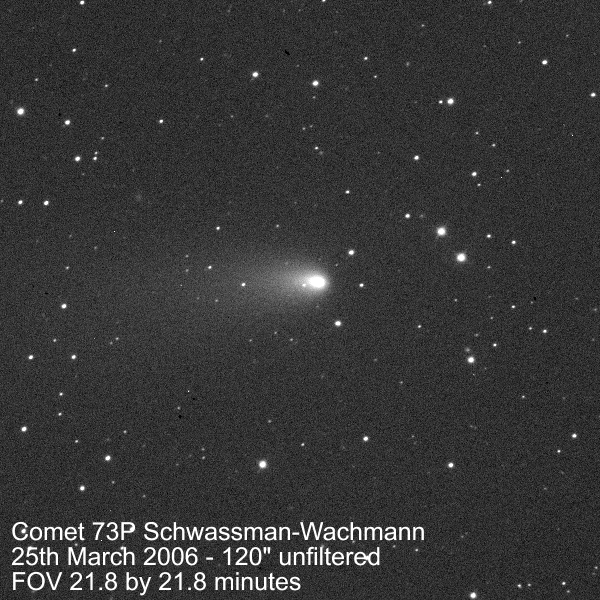
The basic methodology - or what I did
and why I did it
- TARGET SELECTION - I noticed that some high profile
comets were imaged multiple times every day, especially in the period while
they are brightening. Others seem to go long periods without a single reported
measurement. In general terms I feel that the latter group would yield more
useful data than the former.
- IMAGING - Faint, slow moving comets seem to require
two batches of 7x120 seconds taken an hour apart in order to give a positive
identification when the two batches are "tracked and stacked" and then blinked
in Astrometrica. Bright, fast moving comets can be successfully measured using
15 second exposures only 20 minutes apart. Systematic and well documented
experimentation seems to be the key to success here.
- RESULT SUBMISSION - Astrometrica is virtually
fool-proof. Providing you put the right data into the program settings and
measure your images carefully you will get a correctly formatted report with
positions accurate to sub arc-second quality every time.
- WHAT HAPPENS NEXT - Observations of comets sent to
the Minor Planet Center are published on their web site. Publication can be
within a few minutes in the case of the frequently updated
Dates of Last
Observations of Comets web page or within a few days in the case of the
Electronic
Circulars. At one point I was responsible for more "dates of last
observation" that any other observatory in the world. Having achieved this
target I rather lost my enthusiasm for observing comets.
Potential problem areas:-
- In a few cases the software used by the New Mexico
telescopes does not appear to recognise the standard comet names used by the
Minor Planet Center. Scripts using these names will therefore not work - the
easiest way around the problem is to use planetarium software to locate a star
very close to the predicted position of the comet and to use the GSC name or
position of this star as the slew target.
|
|